
London Archaeological Prize
Since its inception in 2004, this biennial publication prize has aimed to promote the highest standards in writing about London’s archaeology.
If you’ve read – or written – a great piece of work over the past two years, why not enter it for this prestigious award?
£250 cash prize and award certificate will be given to the best publication of 2022 and 2023. A second prize of £100, plus certificate, will also be awarded if enough entries of a high standard are received.
We want to encourage as many nominations as possible: anyone may nominate a publication, whether author, publisher or appreciative reader. Publications must be related to the archaeology of Greater London, defined as the area within the M25.
The winning entry, selected by a panel of judges appointed by London Archaeologist, will achieve its stated aims and deliver quality and excellence to its intended readers
Nominations must be received by Wednesday 22nd May 2024.
The prize winner or winners will be announced in November 2024.
Download the Prize Rules and an entry form:
If you’ve read – or written – a great piece of work over the past two years, why not enter it for this prestigious award?
£250 cash prize and award certificate will be given to the best publication of 2022 and 2023. A second prize of £100, plus certificate, will also be awarded if enough entries of a high standard are received.
We want to encourage as many nominations as possible: anyone may nominate a publication, whether author, publisher or appreciative reader. Publications must be related to the archaeology of Greater London, defined as the area within the M25.
- Entries may be produced by professional, amateur or commercial publishers, but must be in digital or printed form (not broadcast).
- Any type of print or digital publication will be eligible – it may be a book, monograph, journal article, blog or the proceedings of a conference.
- The prize committee would particularly like to encourage entries demonstrating innovative approaches and ground-breaking formats.
- There is no restriction on each entry’s target audience – scholars, professional or volunteer archaeologists, the general public or children are all valid.
- The judges will consider the quality and excellence of each entry in relation to a series of agreed criteria, assessing how well each publication addresses its aims.
The winning entry, selected by a panel of judges appointed by London Archaeologist, will achieve its stated aims and deliver quality and excellence to its intended readers
Nominations must be received by Wednesday 22nd May 2024.
The prize winner or winners will be announced in November 2024.
Download the Prize Rules and an entry form:

| London Archaeological Prize Rules 2024 (PDF) |

| London Archaeological Prize Entry Form 2024 (docx) |
All nominations should be returned to Alison Telfer, Coordinator:
- Email: [email protected]
- Post: Alison Telfer, Coordinator London Archaeological Prize, Mortimer Wheeler House, 46 Eagle Wharf Road, London, N1 7ED
The London Archaeological Prize was established in 2004 to encourage high publication standards and wider dissemination of London’s archaeological findings. London Archaeologist administers the Prize, also known as the Publication Prize, which is awarded every two years. It is adjudicated by a panel of judges from professional, academic and voluntary sectors of archaeology. The Prize was initiated jointly in 2004 by the Standing Conference on London Archaeology (SCoLA) and London Archaeologist. After the demise of SCoLA in 2009, sole responsibility passed to LA.
Previous Winners
2004
1st Prize: Kieron Heard and Damian Goodburn. Investigating the maritime history of Rotherhithe.
2nd Prize: Graham Gower and Kieron Tyler. Lambeth unearthed: an archaeological history of Lambeth.
2006
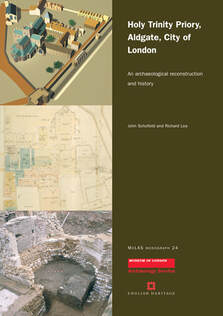
1st Prize: John Schofield and Richard Lea. Holy Trinity Priory, Aldgate: an archaeological reconstruction and history.
2nd Prize: Victor Belcher, Richard Bond, Mike Gray and Andy Wittrick. Sutton House: a Tudor courtier’s house in Hackney.
1st Prize: Kieron Heard and Damian Goodburn. Investigating the maritime history of Rotherhithe.
2nd Prize: Graham Gower and Kieron Tyler. Lambeth unearthed: an archaeological history of Lambeth.
2006
1st Prize: John Schofield and Richard Lea. Holy Trinity Priory, Aldgate: an archaeological reconstruction and history.
2nd Prize: Victor Belcher, Richard Bond, Mike Gray and Andy Wittrick. Sutton House: a Tudor courtier’s house in Hackney.
2008
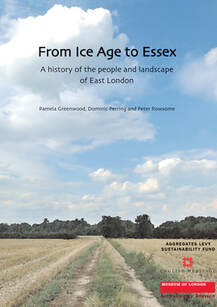
1st Prize. Pamela Greenwood, Dominic Perring and Peter Rowsome. From Ice Age to Essex – a history of the people and landscape of East London.
2nd Prize. Jo Lyon. Within these walls; Roman and medieval defences at the Merrill Lynch Financial Centre, City of London.
2010
1st Prize: Julian Bowsher, Pat Miller. The Rose and the Globe – playhouses of Shakespeare’s Bankside, Southwark: excavations 1988-99.
2nd Prize: PCA. Secrets of the Garden: archaeologists unearth the lives of Roman Londoners at Drapers' Gardens.
1st Prize. Pamela Greenwood, Dominic Perring and Peter Rowsome. From Ice Age to Essex – a history of the people and landscape of East London.
2nd Prize. Jo Lyon. Within these walls; Roman and medieval defences at the Merrill Lynch Financial Centre, City of London.
2010
1st Prize: Julian Bowsher, Pat Miller. The Rose and the Globe – playhouses of Shakespeare’s Bankside, Southwark: excavations 1988-99.
2nd Prize: PCA. Secrets of the Garden: archaeologists unearth the lives of Roman Londoners at Drapers' Gardens.
2012
1st Prize: John Schofield. London 1100-1600.
2nd Prize: Julian Hill, Peter Rowsome. Roman London and the Walbrook stream crossing.
2014
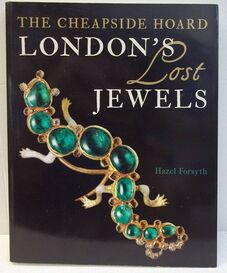
1st Prize: Hazel Forsyth. The Cheapside Hoard: London’s Lost Jewels.
Runners-up: Robert Cowie, Lyn Blackmore, et al. Lundenwic: excavations in Middle Saxon London 1987-2000.
Warwick Rodwell. The Coronation Chair and the Stone of Scone.
1st Prize: John Schofield. London 1100-1600.
2nd Prize: Julian Hill, Peter Rowsome. Roman London and the Walbrook stream crossing.
2014
1st Prize: Hazel Forsyth. The Cheapside Hoard: London’s Lost Jewels.
Runners-up: Robert Cowie, Lyn Blackmore, et al. Lundenwic: excavations in Middle Saxon London 1987-2000.
Warwick Rodwell. The Coronation Chair and the Stone of Scone.
2016
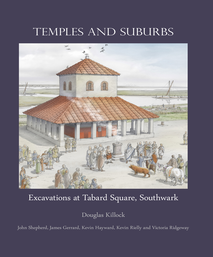
1st Prize: Douglas Killock, John Shepherd, James Gerrard, Kevin Hayward, Kevin Rielly. Temples and Suburbs: Excavations at Tabard Square, Southwark.
2nd Prize: Penny Coombe, Francis Grew, Kevin Hayward and Martin Henig. Roman Sculpture from London and the South-East.
2018
Rebecca Haslam, Guy Thompson. An Immense and Exceedingly Commodious Goods Station: The Archaeology and History of the Great Northern Railway’s Goods Yard at King’s Cross, 1849 to the Present day.
2020
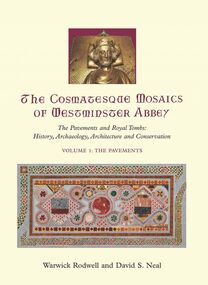
Warwick Rodwell & David S. Neal The Cosmatesque Mosaics of Westminster Abbey Vol. 1 & 2
2022
Robert Cowie Syon Abbey: archaeological investigations in Syon Park, Brentford, 1997–2018, LAMAS Transactions 2020, Volume 71
Warwick Rodwell & David S. Neal The Cosmatesque Mosaics of Westminster Abbey Vol. 1 & 2
2022
Robert Cowie Syon Abbey: archaeological investigations in Syon Park, Brentford, 1997–2018, LAMAS Transactions 2020, Volume 71